Study in a nutshell
Eighteen adults evaluated lightbars or animated eyes. Relative to the starting model, average human ratings improved by 7.9% for lights and 7.7% for eyes.
Imagine standing at a crossing with a cyclist beside you. A pair of animated eyes on an approaching car turns to the left. You both see it. Which of you is the car acknowledging? A signal can be easy to spot and still leave its audience guessing.
In a study called SEE2REFINE, Ding Xia and colleagues trained an AI to design signals for the outside of automated vehicles. They gave the designer a critic that could watch its work. When people later rated videos, the refined designer’s biggest gain for animated eyes came on just that question of audience. Participants gave it a 15.4% higher targeting score than the starting model.
Why the designer needed a pair of eyes
The researchers call a display like this an external human–machine interface, or eHMI. A bar of lights, animated eyes or a robotic arm can all serve as one. A language model can write instructions for any of them. But a description that sounds clear to its author may look ambiguous when it starts moving.
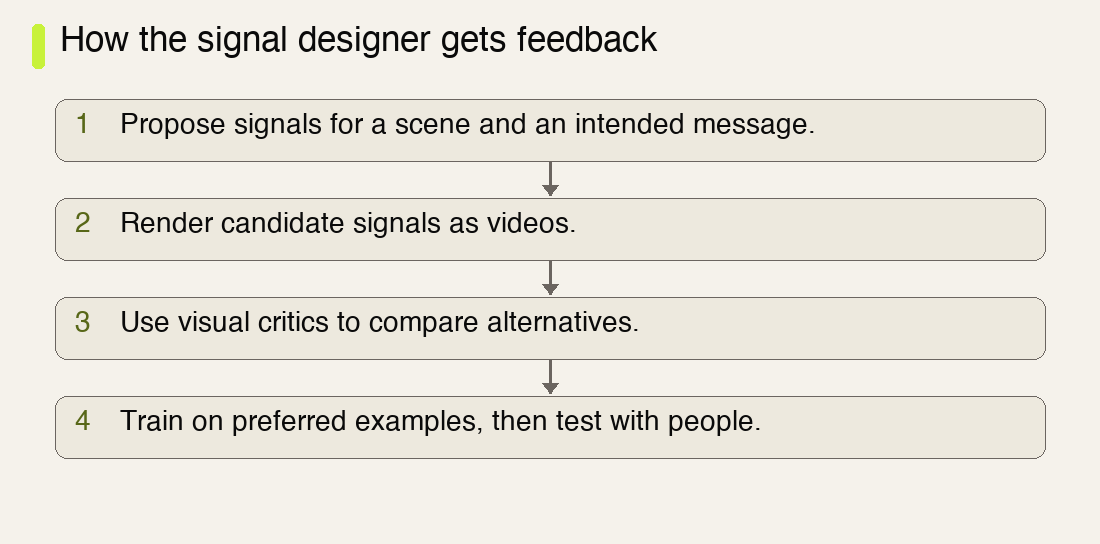
The critics were vision-language models, a type of AI that can inspect images and respond in words or scores. Comparing different signals for the same situation gave the designer examples of what those critics preferred. The researchers then asked whether people shared those preferences.
What people saw in 80 short videos
Eighteen adults aged 21 to 30 took part. Nine evaluated animated eyes and nine evaluated lightbars. Across the experiment, five design models produced 80 clips covering eight situations. Viewers first saw each signal without being told its purpose. They rated qualities including who seemed to be addressed and how safe they felt. Only then did they learn the intended message and judge how well the signal matched it.
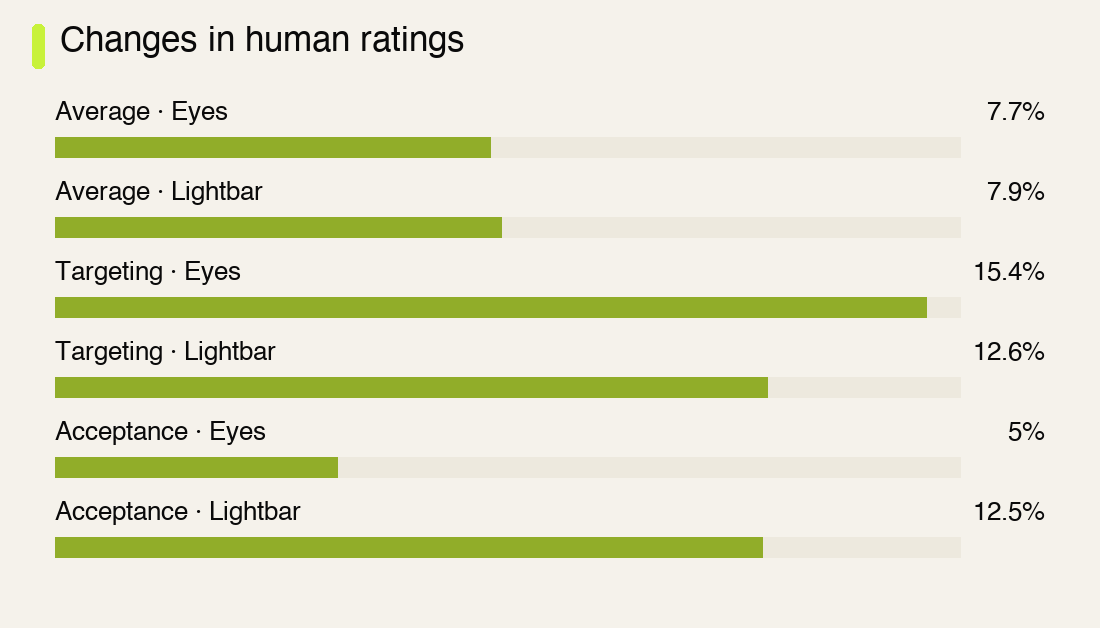
The lightbar’s targeting and acceptance ratings rose by similar amounts. For the eyes, the gain in targeting was about three times the gain in acceptance. Those judgments answer different questions. Someone might feel that a pair of eyes is looking directly at them yet still wonder what the car means by it.
The refined designer placed fourth out of five for both displays. It finished ahead of its starting model, while designs from GPT-5, Claude Opus 4.1 and Grok 4 received higher overall ratings.
The lightbar exposed a second problem
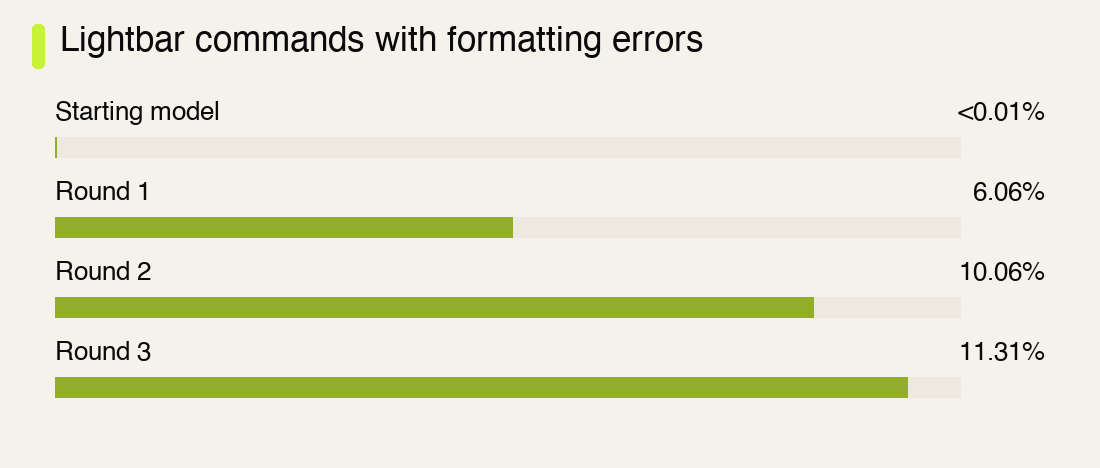
A lightbar command used a sequence of 16 binary digits to specify the state of its lights. As training progressed, the designer more often produced commands in the wrong format. By the third round, that happened in roughly one output in nine. The researchers suggest the model struggled with the long strings of digits.
What changes at a real crossing?
A viewer watching a video has a different task from a pedestrian deciding what to do in traffic. The study measured people’s impressions in simulated scenes. It leaves open how quickly someone would interpret a signal in bright sunlight, behind an obstruction or while watching another vehicle. The small age range also leaves children’s and older adults’ interpretations untested.
SEE2REFINE offers designers a way to compare ideas before asking people to test them. Its most instructive result is that two checks can move in opposite directions: people can prefer the signals they see even as the system grows less reliable at writing the commands that produce them.
Conclusion
The improved ratings make visual feedback worth testing as a design aid. People judged rendered videos, and lightbar command errors increased during training. Perceived clarity and reliable execution need separate checks.
Frequently asked questions
Participants rated videos, including how safe they felt. The experiment did not measure crossing behavior in live traffic.
It illustrates how to compare an automated evaluator’s preferences with human judgments. That evaluation method can inform a search audit, although the paper itself studied vehicle signals.
Read the original research paper
Related study · Can an AI explain why its forecast should come true?
Explore more Google research papers explained.